



What Is Ethnic Rhinoplasty?
Ethnic Rhinoplasty commonly known as nose surgery is not merely an operation to alter the external appearance of the nose. In my surgical philosophy, rhinoplasty is the art of preserving and enhancing the vital function of healthy breathing while achieving complete harmony with the overall proportions of the face.
Because the nose sits directly at the center of the face, it directly influences our facial expression and profile balance. The goal of a successful rhinoplasty is not to create an artificial or "operated-looking" nose, but to achieve a natural, cohesive result that best complements the patient's individual facial features, expressions, and character.
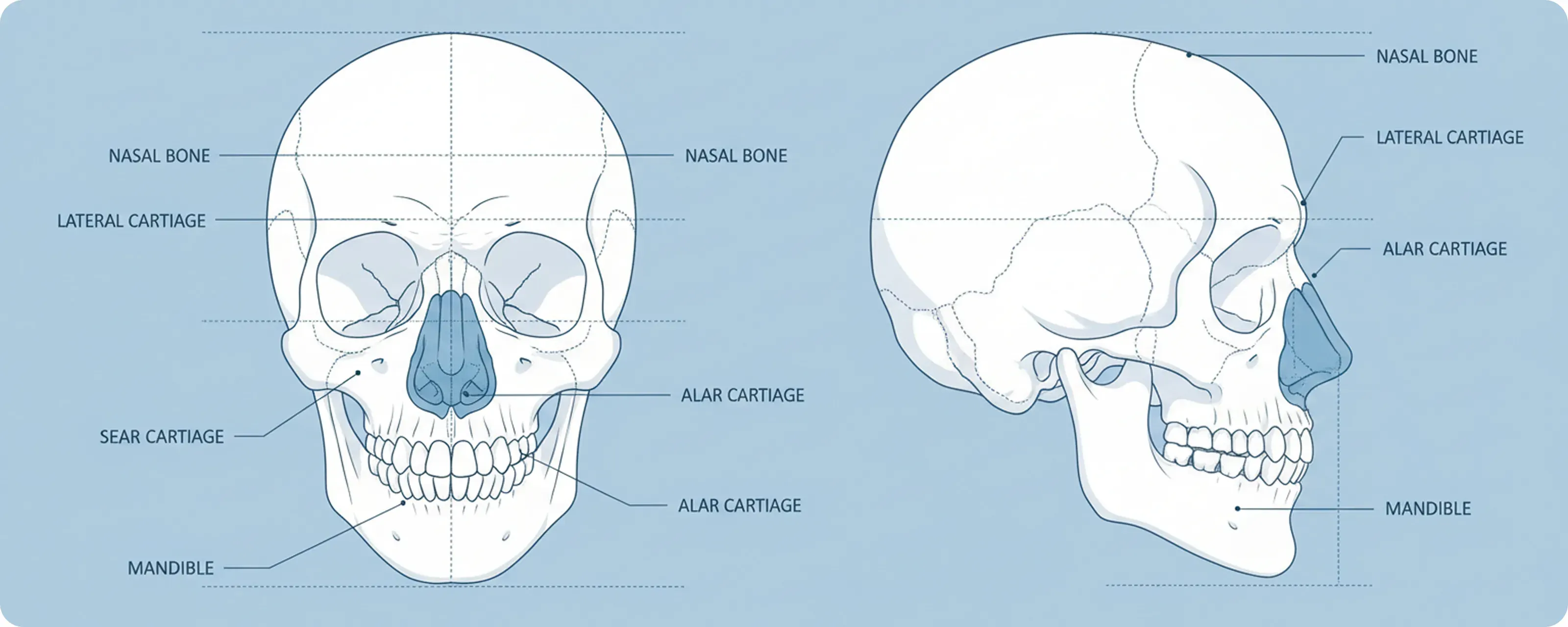
Who Is a Good Candidate?
The decision to undergo rhinoplasty is not merely about making a change seen in the mirror; it is a nuanced process where a patient's physical anatomy, overall health status, and psychological expectations are evaluated as a whole. During initial consultations at our clinic, we thoroughly analyze both aesthetic expectations and respiratory quality to determine candidate suitability.
- Seeking facial balance: A dorsal hump, asymmetry, excess width, a drooping tip, or structural disproportion from genetic or ethnic traits.
- Experiencing breathing difficulty: Obstructed breathing, snoring or reduced sleep quality caused by a deviated septum, enlarged turbinates or airway narrowness.
- Revision candidates: Unsatisfied with a previous surgery where an earlier operation did not achieve the intended functional or aesthetic result.
- Having realistic expectations: Understanding that the goal is not to copy someone else's nose, but to achieve a result that best complements one's own facial anatomy and supports optimal breathing.
- Completed physical growth and good overall health: Bone and cartilage development must be complete (at least 16 for females, 17 for males) without serious chronic conditions posing surgical or anesthetic risks.
Risks & Important Considerations
No surgery is risk-free, but rhinoplasty has a low complication rate when performed by an experienced surgeon. It is a complex, advanced procedure not a minor one and the points below are part of making an informed decision.
- Temporary asymmetry: The two sides of the nose may heal at different rates during the recovery process.
- Sensory changes: Temporary loss of smell or altered nasal sensation that gradually recovers over several weeks.
- Physical activity restrictions: Avoiding physical impact is essential — light walking can resume around 4–6 weeks, while intense exercise should be avoided for up to 6 months.
- Secondary revisions: A small percentage of patients (approx. 2–15%) may seek a minor secondary revision after full healing is completed at the end of year one.